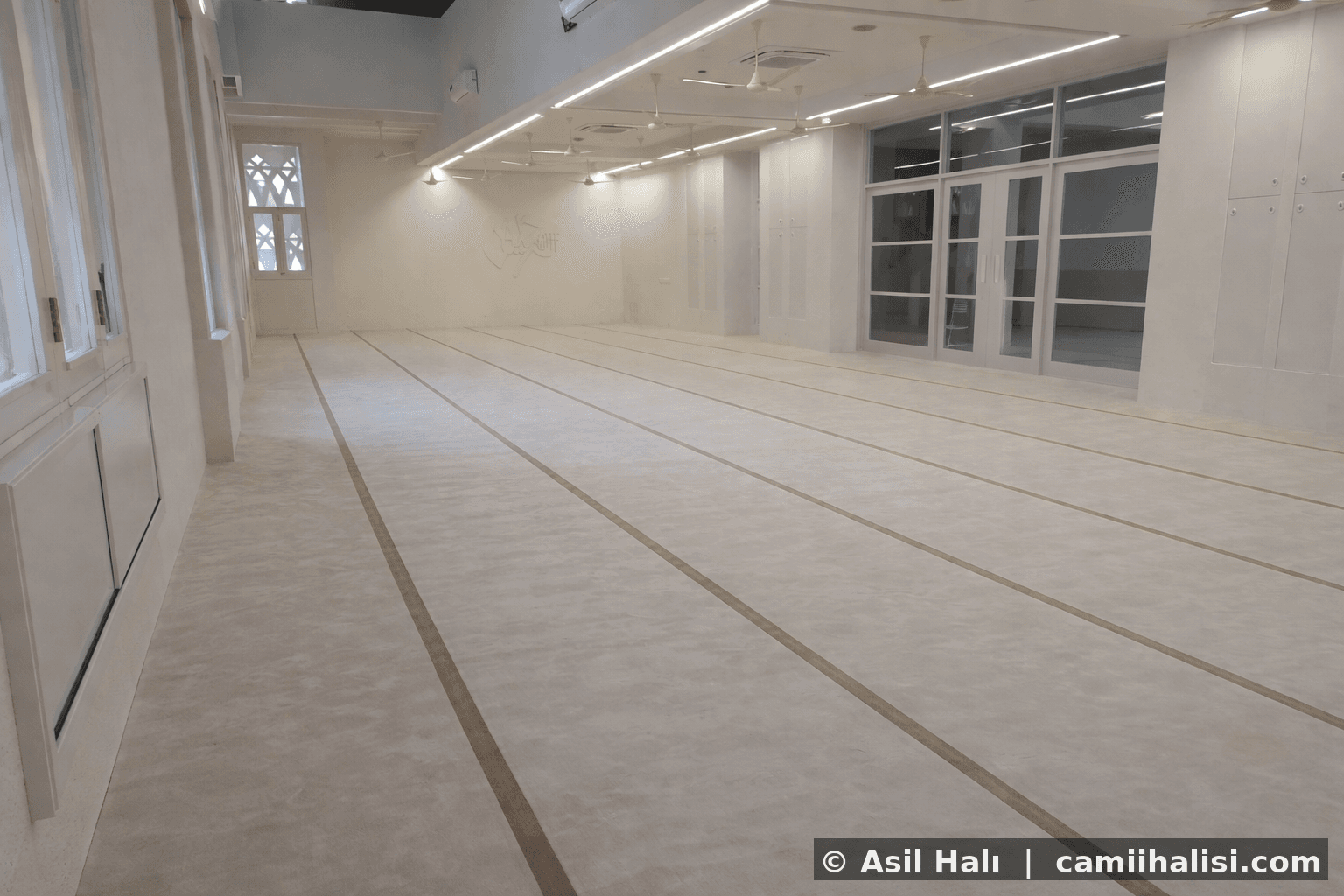
Mosque carpet installation plays a critical role in the aesthetic and functional arrangement of mosques. So, how is mosque carpet installation done? This process requires the right material selection, floor preparation, and professional application techniques. Installation methods may vary depending on the type of mosque carpets, raw material properties, and usage areas. For instance, acrylic, wool, or polypropylene carpets come with different gram weights and pile heights. In this guide, we will cover the installation processes of lined, domed, and prayer rug-style mosque carpets in detail. Additionally, we will share all technical details, from the 50 years of experience and 10,000+ mosque references of Asil Halı to fire resistance certificates. By learning what to pay attention to during installation, you can ensure your mosque achieves both safety and aesthetic appeal. Keep reading to discover everything about mosque carpet installation!
How to Install Mosque Carpets? Step-by-Step Guide
The question of how to install mosque carpets is an important topic for mosque administrators and congregations. Mosques, as places of worship, require both aesthetic and functional organization. One of the most crucial elements of this organization is mosque carpets, which, if not installed correctly, can pose safety risks and have a shortened lifespan. In this guide, we will detail all stages of mosque carpet installation, provide information on different carpet types and technical specifications, and explain what to consider during the process by sharing the reliable services offered by Asil Halı with its 50 years of experience and over 10,000 mosque references.
Preparations Before Mosque Carpet Installation
The first answer to the question of how to install mosque carpets lies in a proper preparation process. Before starting the installation, a floor analysis must be conducted, and suitable materials should be selected. The floor must be smooth, clean, and dry. Any moisture or dust can prevent the carpet from adhering properly and may cause deformation over time. Additionally, choosing a carpet model that suits the architectural structure of the mosque is important. For example, lined mosque carpets are preferred for large areas, while domed models may be chosen for smaller or custom-designed spaces.
Another crucial step before installation is taking accurate measurements. Professional measurement and precise cutting are essential to ensure the carpet fits perfectly in the mosque area. Asil Halı supports this process with its expert team, guaranteeing a seamless installation.
Floor Preparation and Cleaning
Floor preparation is one of the most critical stages of mosque carpet installation. Different preparation methods are applied for various floor types such as concrete, wood, or stone. First, all dust, dirt, and debris must be cleaned from the floor. If the floor is uneven, leveling should be done to eliminate irregularities. Moist floors can hinder adhesion, so drying the surface should not be neglected.
Mosque Carpet Types and Installation Techniques
The installation of mosque carpets varies depending on the material used and the design type. Factors such as the raw material of the carpets, gram weight per square meter, pile height, and stitch density directly affect the installation process. Now, let’s explore different mosque carpet types and how these features impact installation.
Lined Mosque Carpet Installation
Lined mosque carpets are models that facilitate orderly prayer rows for the congregation during worship. These carpets are typically made from acrylic or polypropylene raw materials, with a gram weight per square meter ranging from 800-1200 grams. With a pile height of 8-12 mm, these carpets offer comfort during long-term use due to their non-marking texture. During installation, the direction of the lines must be aligned with the qibla direction of the mosque, and the carpet must be securely fixed to the floor. Asil Halı’s lined models stand out with their antistatic structure and easy-to-clean features.
Domed Mosque Carpet Installation
Domed mosque carpets add an aesthetic appeal to mosques and are usually made from wool or polyamide materials. These carpets have a gram weight per square meter ranging from 1000-1500 grams, with a pile height of 10-14 mm. Stitch density is crucial for the clarity of patterns, and careful cutting is required during installation to avoid distorting the designs. The installation of domed carpets is typically centered in the mosque, with lined models often used to complete the surrounding areas. Asil Halı ensures safety with its fire-resistant (non-flammable) certified domed carpets.
Prayer Rug-Style Mosque Carpet Installation
Prayer rug-style mosque carpets provide individual prayer mat designs for each worship area, enabling the congregation to pray in an orderly manner. These carpets are generally made from acrylic or polypropylene materials, with a gram weight per square meter ranging from 900-1300 grams. With a pile height of 9-13 mm, these models offer durability due to their stitch density. During installation, aligning the prayer mat designs with the qibla direction is crucial. Asil Halı’s prayer rug-style models add value to mosques with both aesthetic and functional features.
Materials and Technical Details Used in Mosque Carpet Installation
Another important aspect of the question of how to install mosque carpets is the materials and technical details involved. Double-sided tape, carpet adhesive, or special fixing systems are commonly used in carpet installation. These materials ensure the carpet adheres firmly to the floor, eliminating safety risks such as slipping.
The raw material of the carpets also affects the installation process. For example, wool carpets are heavier and more flexible, while polypropylene carpets are lighter and easier to shape. Acrylic carpets are both durable and cost-effective. Polyamide carpets offer long-term use with high abrasion resistance. Additionally, the gram weight per square meter influences how the carpet settles on the floor. Heavier carpets require fixing, while lighter ones can be easily installed with adhesive.
Importance of Pile Height and Stitch Density
Pile height directly affects the comfort and lifespan of the carpet. A pile height ranging from 8-14 mm provides ideal softness for mosque carpets. Stitch density determines the durability and clarity of patterns in the carpet. Tighter stitches ensure the carpet looks new for longer. Asil Halı pays attention to these technical details, offering both aesthetic and functional solutions for mosques with its carpets.
Points to Consider During Mosque Carpet Installation
When seeking answers to how to install mosque carpets, there are several important points to consider. First, it is recommended that the installation be carried out by a professional team. Incorrect application can lead to rapid deformation of the carpet or create safety hazards. Additionally, regular cleaning and maintenance of the carpet extend its lifespan. Asil Halı’s easy-to-clean and antistatic carpets provide a significant advantage in this regard.
From a safety perspective, it is crucial that carpets have fire resistance (non-flammable) certificates. Asil Halı prioritizes mosque safety by providing these certificates for all its products. Moreover, non-marking textures ensure the congregation can worship comfortably.
Why Should You Seek Professional Support?
Mosque carpet installation is a process that requires expertise. Incorrect installation can shorten the carpet’s lifespan and spoil the mosque’s aesthetic appearance. Asil Halı, with 50 years of experience and over 10,000 mosque references, is a leading brand in this field. With its professional team, it provides support at every stage of the installation process, ensuring your mosque is arranged in the best possible way.
In conclusion, when seeking answers to how to install mosque carpets, selecting the right materials, professional application, and working with a reliable brand are of great importance. Asil Halı continues to add value to your mosques with its quality products and services. For more information about the installation process or carpet selection, feel free to contact us.